Rapid ejaculation can leave men feeling frustrated or anxious about sex and unsure how to change the experience. This article explores what may contribute to the rush towards ejaculation and how greater awareness of arousal, communication and appropriate support can help make sex more pleasurable and less pressured.
More than a question of time
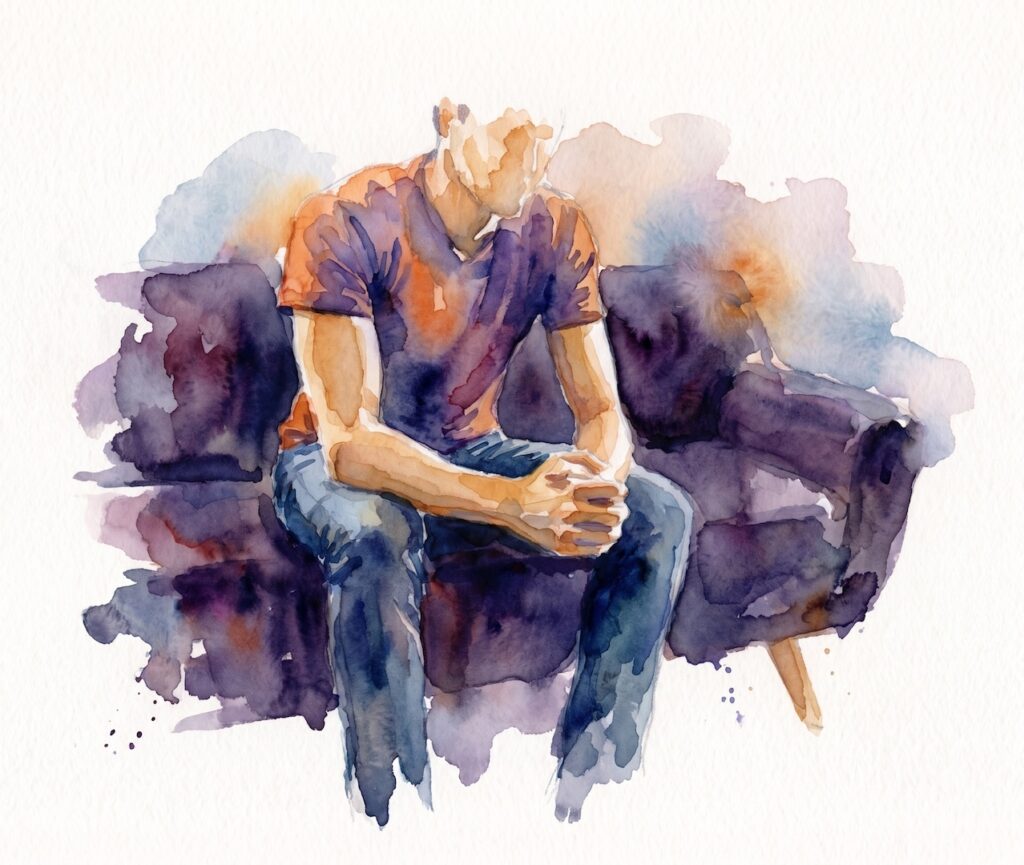
Men often describe rapid ejaculation in a single sentence: “I come too quickly.” It sounds like a complaint about time, but the experience is usually more complex. Arousal may rise suddenly, the body may become tense and ejaculation may arrive before the man has been able to recognise what is happening, remain with his pleasure or communicate with the person beside him. What feels most troubling is not always the number of minutes involved, but the sense of having been carried somewhere before he felt able to slow down.
The usual clinical term is premature ejaculation. I prefer rapid ejaculation because “premature” implies that there is a correct time at which a man should ejaculate and that he has somehow failed by arriving early. Rapid describes the movement itself: the body travels quickly from initial excitement towards ejaculation.
Clinical definitions look at more than duration. They also consider whether a man can delay ejaculation and whether the pattern causes distress or difficulty in his sexual relationships. Some definitions associate lifelong premature ejaculation with ejaculation before or within approximately one minute of vaginal penetration. Such measurements can be useful in research, but they do not establish how long sex ought to last, nor do they describe anal sex, oral sex, masturbation or the many other ways people experience pleasure.
The more useful question is therefore not simply, “How can I last longer?” It is, “What happens in my body and mind as I become aroused, and where do my choices begin to disappear?”
What happens in the rush?
Sexual arousal is sometimes represented as a sequence of excitement, plateau, orgasm and resolution. No model captures every sexual experience, yet the idea of a plateau is particularly helpful here. It names the period during which arousal is clearly present and may rise, settle or remain steady before orgasm.
Eventually arousal reaches the point of ejaculatory inevitability: the moment after which ejaculation will occur even if stimulation stops. Before this point, there is usually some capacity to slow down, pause, change the stimulation or speak to a partner. I think of this as the window of choice.
For a man who experiences rapid ejaculation, the passage through plateau may be so quick that this window is very narrow. He may notice little build-up and then suddenly realise that ejaculation is inevitable. Trying to stop at that moment can feel like attempting to brake after the car has already crossed the line.
The purpose of psychosexual therapy is not to impose perfect control over the body. It is to become familiar with the earlier stages of arousal, when slowing down or changing the stimulation is still possible. Rather than treating arousal as a single climb that must end in ejaculation, it can be experienced more like a wave: rising, settling and rising again. Recognising these changes may help you stay with pleasure for longer.
Why might arousal move so quickly?
There is no single cause of rapid ejaculation. Biological, medical, psychological, sexual and relational influences can overlap, and the particular combination differs from one man to another.
For some men, the pattern has been present since their earliest sexual experiences. Individual bodies vary, and some appear predisposed to reach ejaculation more rapidly. Awareness practices may create more room within the experience, but they do not necessarily remove an underlying biological tendency.
When rapid ejaculation begins after a period without the difficulty, a medical assessment may be important. Erectile difficulties, inflammation of the prostate and an overactive thyroid can sometimes be associated with acquired rapid ejaculation. A sudden change, particularly alongside pelvic pain, painful ejaculation, urinary symptoms or difficulty maintaining an erection, deserves medical attention. Treatments may include addressing an underlying condition or using medication that delays ejaculation. Medical treatment can also be helpful when the difficulty has been present since the earliest sexual experiences.
Sexual learning also matters. A boy or young man who masturbated hurriedly because he feared being discovered may have learnt to move directly from excitement to release. Another man may have become accustomed to very intense genital stimulation or muscular bracing. None of these behaviours automatically causes rapid ejaculation. The relevant question is what rhythm the body has rehearsed: whether pleasure has usually been something to inhabit or something to complete quickly.
The fear of losing an erection can create another kind of urgency. If a man fears losing his erection, he may rush towards penetration and ejaculation. In this situation, the attempt to protect one aspect of sexual functioning can inadvertently accelerate another.
Receiving pleasure can also feel more exposing than giving it. Some men feel relatively secure while they are active and attending to somebody else, but become overwhelmed when they are touched, desired, given oral sex or penetrated. The intensity may contain excitement, vulnerability, self-consciousness and the feeling of being watched. For some men, it may be useful to explore whether the rush towards ejaculation is connected with feeling exposed or overwhelmed when receiving pleasure.
Finally, the sexual relationship itself shapes the body’s response. Conflict, unfamiliarity, long periods without sex, fertility pressures or the belief that one partner is responsible for producing the other person’s orgasm can all bring urgency into the encounter. Rapid ejaculation may occur with one partner and not another. These possibilities are not ready-made explanations; they are areas for curiosity about a particular man, in a particular body and relationship.

Learning to recognise arousal earlier
Self-pleasure provides a private setting in which to study arousal without having to satisfy anybody or appear competent. The exercise is not to prove that you can last for a certain period. It is to notice more of what happens before ejaculation feels unavoidable.
You might imagine arousal on a scale from zero to ten. Zero represents no sexual arousal; at four or five, pleasure is clearly present; at six or seven, arousal is strong; at eight, it is intense but you may still be able to change direction; nine is the point of ejaculatory inevitability; and ten represents orgasm, ejaculation or both. The numbers are approximate and personal; use them as a rough guide to your own experience.
Pay attention to the bodily signs that accompany the numbers. Your breathing may become faster, your testicles may rise, or your abdomen, buttocks, thighs, jaw or pelvic floor may tighten. You may feel an urgent wish for more speed or pressure. Fantasy may become more insistent while your attention narrows towards the penis.
During self-pleasure, experiment with noticing arousal around six or seven rather than waiting until nine. You might soften your grip, reduce the pace, change posture, touch another part of your body or allow your erection to become slightly softer. The aim is not necessarily to remove stimulation altogether. It is to discover whether intensity can decrease without pleasure disappearing.
When arousal has settled, return to more direct touch if you wish. Over time, this creates an experience of waves rather than one uninterrupted ascent. It is important, however, not to turn observation into anxious monitoring. Watching yourself for signs of failure reproduces the same performance pressure in another form. Curiosity sounds different: “What am I noticing now? What changes if I soften? What does my body want?”
Breath, muscular tension and the pelvic floor
As arousal increases, you may notice yourself holding your breath or tightening your abdomen, buttocks or jaw. Some muscular tension is a natural part of excitement. Becoming aware of it earlier gives you an opportunity to slow down and explore how softening affects your pleasure.
Try breathing comfortably, allowing your lower abdomen to expand gently as you inhale. A relaxed sigh on the outbreath may help you release tension. Notice what changes, keeping your breathing easy and unforced.
The pelvic floor – the group of muscles at the base of the pelvis – can also become tense. Exploring how these muscles relax is sometimes called a reverse Kegel. As you inhale, imagine the area around the anus and perineum, between the scrotum and anus, softening and gently widening. Keep your buttocks and thighs relaxed, and avoid pushing or bearing down.
Practise while arousal is still manageable, allowing time to notice the sensations. For some men, this awareness can support a greater sense of choice about slowing down or changing stimulation. If you experience pelvic pain or persistent difficulty relaxing these muscles, a pelvic health physiotherapist can offer individual guidance.
Bringing the practice into sex with another person
Partnered sex introduces another person’s desires, responses and vulnerabilities. It also makes communication part of the practice. A couple might agree beforehand that penetration can include intervals of stillness. They can pause movement while remaining in contact, notice their breathing and closeness, and then continue, change position, withdraw or return to whole-body touch.
These pauses are most useful before urgency takes over. If they happen only when ejaculation is seconds away, they can feel like emergency measures. Used earlier, they become part of the erotic rhythm. A simple sentence – “I am getting close; can we slow down?”- allows the partner to participate rather than leaving the man alone with the task of control.
Ejaculation also need not mark the end of the encounter. The erection may subside and the body may need time to recover, but kissing, touching, oral pleasure, tenderness, play or rest can continue. When sex is larger than penetration, the exact timing of ejaculation carries less responsibility for the success of the whole experience.
Making room for choice
Choice begins earlier, as a man learns to recognise his arousal, understand what accelerates it and respond before ejaculation becomes inevitable. Progress may mean staying with pleasure for longer. It can also mean feeling more comfortable receiving touch, communicating more openly and experiencing less shame when ejaculation happens quickly.
Medical care and psychosexual therapy can support this process alongside individual practice and conversations with a partner. With the right support, the aim is to develop greater confidence and flexibility, so that sex feels more pleasurable and less pressured.