Talking about sex, intimacy, or desire can feel like one of the most difficult conversations to start – even with someone you trust, let alone a professional. Many people carry questions, worries, or experiences they’ve never found the right words for. That silence is understandable. It is also, often, where psychosexual therapy begins.
Psychosexual therapy is a talking-based therapeutic approach that creates a calm, confidential space to explore the relationship between your emotional life and your sexual and intimate self. It is not a medical examination. It does not involve physical contact. It is not about performance, technique, or being taught what you ‘should’ want. It is, at its core, a conversation – one that moves at your pace and begins wherever feels right for you.
Whether you are navigating a specific difficulty, trying to understand a pattern that keeps repeating, or simply wanting to feel more at ease in your intimate life, this guide offers an honest introduction to what psychosexual therapy is, how it works, and what you might expect.
What Is Psychosexual Therapy?
The word ‘psychosexual’ brings together two ideas: the psychological – our thoughts, emotions, histories, and sense of self – and the sexual, which encompasses desire, intimacy, arousal, and how we connect with our bodies and with others. Psychosexual therapy works at the intersection of these two worlds.
As a talking-based therapeutic approach, psychosexual therapy explores how your inner emotional life shapes your experience of intimacy and sex. This might include the stories you have absorbed about what sex should look like, the ways past relationships or experiences have left their mark, or the feelings – anxiety, shame, disconnection, grief – that can surface when intimacy feels difficult.
Psychosexual therapy is inherently relational in nature. This means the therapeutic relationship itself – the quality of connection, trust, and mutual understanding between you and your therapist – is not just a backdrop to the work; it is part of the work. A good therapist does not position themselves as an expert dispensing answers from a distance. Instead, they work collaboratively with you, following your lead, holding curiosity rather than assumption, and adjusting the focus of sessions in response to what you bring.
The theoretical approaches a psychosexual therapist draws on will vary. Humanistic frameworks, which place your lived experience, autonomy, and potential for growth at the centre – often form the foundation. These are frequently enriched by psychodynamic thinking, which attends to how early relationships and unconscious patterns shape present experience, and by attachment theory, which explores how our earliest bonds influence the way we seek or avoid closeness in adult life. Alongside these, many therapists also use more goal-oriented, conversational tools, drawing from approaches such as cognitive behavioural therapy or solution-focused techniques, that help clients build practical skills in communication, express needs more clearly, and navigate difficult conversations with greater confidence.
It is worth noting how psychosexual therapy relates to ‘sex therapy’ – a term often used interchangeably, though with some distinction. Sex therapy tends to be associated with structured behavioural exercises aimed at specific sexual difficulties. Psychosexual therapy, by contrast, tends to place greater emphasis on the emotional and relational landscape: why something is happening, not just how to address it. In practice, many therapists integrate both dimensions, and the boundary between them is often fluid.
Common Reasons People Seek Psychosexual Therapy

People arrive at psychosexual therapy from many different starting points. There is no threshold you need to cross, no severity of difficulty that qualifies you to be there. Some come with a long-standing concern; others with something that has only recently shifted. Many simply want a space to understand themselves better.
Some of the most common areas people bring to therapy include:
- Pain during sex or physical discomfort (such as vaginismus or dyspareunia), which may have physical and emotional dimensions that intertwine
- Erectile difficulties or arousal challenges, which are often bound up with anxiety, pressure, or relationship dynamics rather than purely physical causes
- Differences in desire – either within yourself over time, or between you and a partner
- Shame, anxiety, or self-doubt around sex or the body, which can make intimacy feel fraught or impossible
- The impact of past experiences, including difficult relationships, sexual trauma, or messages received in childhood about sex and the body
- Questions about sexual identity, orientation, or the kind of intimacy you want in your life
What brings one person to therapy may be entirely different from what brings another. None of these experiences is more valid or more worthy of support than the rest. If something is affecting your wellbeing or your relationships, that is reason enough.
How Psychosexual Therapy Can Support Relationships
Intimacy does not exist in isolation. It is woven into the fabric of how we relate to one another – how safe we feel, how seen, how able to be ourselves. When something shifts in the intimate dimension of a relationship, it can quietly affect everything else: communication, closeness, trust, day-to-day connection.
Psychosexual therapy can be a space to explore these relational patterns with more curiosity and less defensiveness than everyday conversation sometimes allows. For couples, this might mean finding new ways to talk about sex and desire – honestly and without fear of the response. It might mean understanding why a particular dynamic keeps repeating, or gently rebuilding a sense of closeness that has eroded over time.
Therapy can also help partners hear each other differently. Not by imposing a template of how intimacy ‘should’ look, but by creating enough safety for each person to say what they actually feel and want – and for those words to land. Emotional safety, it turns out, is often the precondition for physical closeness, not the other way around.
It is worth saying that not all relational work in psychosexual therapy involves a partner. Individual therapy can be just as transformative for understanding your own patterns in relationships – what you bring to intimacy, what you find difficult, and what you might want to change.
What Happens In a Psychosexual Therapy Session?
For many people, the question of what actually happens in a session is one of the first things that needs to be answered before they feel ready to take the step of making contact. It is a reasonable question, and the answer is simpler than many expect.
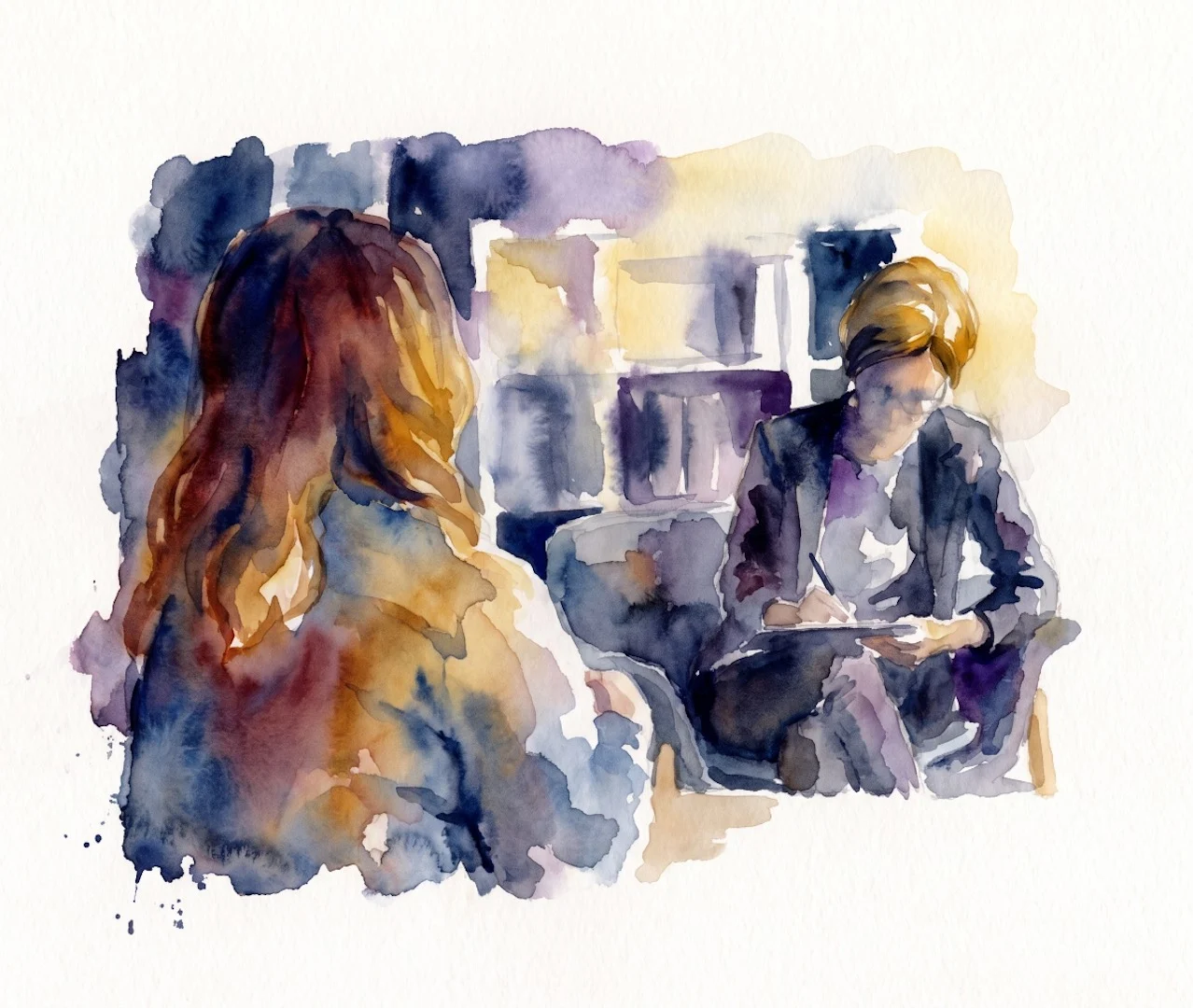
Psychosexual therapy sessions are talking sessions. They take place in a private, confidential setting – increasingly also online – and involve no physical examination or physical contact of any kind. You will never be asked to demonstrate anything or to do anything outside the room that you are not comfortable with.
Early sessions tend to be exploratory. A therapist will usually want to understand something of your background, your current situation, and what has brought you to therapy at this particular point. This is not an interrogation – it is the beginning of building a shared understanding. You are not expected to share everything at once, and there is no agenda to rush through.
As therapy progresses, the focus will develop in response to what emerges. Some people find that talking itself – being truly heard on matters they have never spoken aloud – is significant. Others find that therapy helps them identify specific patterns or beliefs that have been quietly shaping their experience. The pace is always led by you.
Sessions typically last fifty minutes and may be weekly or fortnightly. Therapy can work with individuals, with couples, or with people of any gender, orientation, or relationship structure. There is no particular way a person seeking psychosexual therapy is supposed to look or be.
Sensate Focus and Other Common Techniques
While psychosexual therapy is, at its heart, a talking therapy, many practitioners also draw on structured techniques that clients can explore between sessions, usually at home and in their own time. These are offered as gentle invitations rather than instructions to follow, and a good therapist will always check that any suggested exercise feels right for you before introducing it.
One of the most widely used is sensate focus, developed by Masters and Johnson and still considered a cornerstone of sex therapy practice. It involves a series of structured touching exercises, usually undertaken by couples at home, in which physical contact is deliberately separated from any expectation of arousal, performance, or intercourse. In the earliest stages, partners take turns touching one another’s bodies – often excluding breasts and genitals at first – with the sole aim of noticing sensation and communicating what feels pleasant, without any pressure to ‘achieve’ a particular response.
As the work progresses, the exercises gradually broaden to include more intimate touch, and eventually intercourse, but always at a pace agreed between the couple and their therapist. The purpose is to interrupt patterns of sexual performance anxiety, spectatoring, or goal-orientated sex, and to rebuild intimacy and trust through curiosity rather than pressure. Sensate focus is often particularly helpful where anxiety, self-consciousness, or a fear of ‘failing’ has become entangled with physical closeness, since it removes the outcome that anxiety tends to attach itself to.
Sensate focus is rarely used in isolation. Our therapists typically draw on a wider toolkit of techniques, chosen according to what is emerging in the work and the particular concerns a client brings. Some of the most common include:
• Mindfulness-based approaches, which help clients stay present in their bodies during intimacy rather than becoming caught up in anxious or self-critical thoughts
• Communication and needs-based exercises, often drawn from attachment theory or transactional analysis, which support clients in identifying and expressing what they actually want, rather than what they assume a partner expects of them
• Cognitive and behavioural techniques, such as gently challenging unhelpful beliefs about sex and the body, or graded approaches that build confidence and reduce avoidance step by step
• Targeted behavioural strategies, for specific concerns such as ejaculatory control, which a therapist may introduce alongside the wider emotional and relational work rather than as a stand-alone fix
• Relaxation and breathing techniques, which can support clients experiencing pain or tension during sex, often used alongside, or with referral to, pelvic health specialists
• Psychoeducation, offering accurate, non-judgemental information about sexual response, the body, and common experiences, which can in itself ease shame or worry that has built up around a difficulty
None of these techniques is applied mechanically or in isolation from the relational work that underpins psychosexual therapy. They sit alongside the conversation, not in place of it – tools that a therapist introduces collaboratively, at the right moment, and always in service of the wider understanding that talking therapy makes possible.
How Intima Therapy Can Help With Psychosexual Therapy
Psychosexual therapy requires a particular kind of training. Therapists working in this area need not only a solid foundation in general psychotherapy or counselling, but also specialist knowledge of sexual health, relational dynamics, and the many ways that emotional experience intersects with intimate life. Professional accreditation – through bodies such as COSRT (the College of Sexual and Relationship Therapists) or BACP – provides an important marker of that training and of an ongoing commitment to ethical, reflective practice.
All of our therapists are registered with COSRT, the College of Sexual and Relationship Therapists, which represents the highest standard of specialist accreditation in this field in the UK. COSRT registration means your therapist has completed rigorous training specific to psychosexual and relationship work, adheres to a clear ethical framework, and is committed to ongoing professional development and reflective practice.
Our approach is relational and collaborative. We work primarily from humanistic foundations – meaning your experience, values, and capacity for growth are always at the centre – while also drawing on psychodynamic and attachment-based thinking to explore the deeper patterns that shape intimate life. Where it is helpful, we also use more goal-oriented, conversational tools to support clients in developing their ability to communicate: to say what they need, to hear what a partner is expressing, and to have the kinds of conversations that can feel hardest to start.
We understand that reaching out is rarely easy. That first message often arrives after a long period of uncertainty. Our aim is to make that step feel worthwhile – by responding with warmth, clarity, and care, and by matching you with a therapist whose approach feels like the right fit.
Understanding what psychosexual therapy is, and what it is not, is often the first step towards deciding whether it might be right for you. If any part of what you have read here has resonated, we invite you to explore further. You can find out more about our psychosexual therapy service, browse our therapist profiles, or go ahead and schedule a free 15-minute consultation to get a sense of who we are and how we work.
FAQs
Is psychosexual therapy the same as sex therapy?
The two terms are often used interchangeably, and in many contexts they refer to the same thing. If there is a distinction, it tends to be one of emphasis: sex therapy is often associated with structured behavioural approaches to specific sexual difficulties, while psychosexual therapy places particular weight on the emotional, relational, and psychological dimensions. In practice, most practitioners draw on both, and the difference matters less than finding a therapist whose approach suits you.
Do I need to attend with a partner?
No. Psychosexual therapy is available to individuals and couples alike. Many people attend on their own to work through concerns that are personal to them-whether or not they are in a relationship. Others attend as a couple, either from the outset or after some individual work. There is no single right way to approach it.
Is psychosexual therapy only for sexual problems?
Not at all. While specific sexual difficulties – such as pain, arousal challenges, or differences in desire – are common reasons people seek this kind of support, psychosexual therapy also addresses broader questions of intimacy, connection, identity, and self–understanding. Some people come not because something is ‘wrong’ but because they want to understand themselves better, or to feel more at ease in their intimate life.
How long does psychosexual therapy last?
There is no fixed answer, because therapy is shaped by the person, or people, doing it. Some find that a focused short-term piece of work, perhaps six to twelve sessions, is enough to make meaningful progress. Others prefer a longer exploratory process. Your therapist will discuss this with you openly, and the duration will be something you decide together as understanding develops.