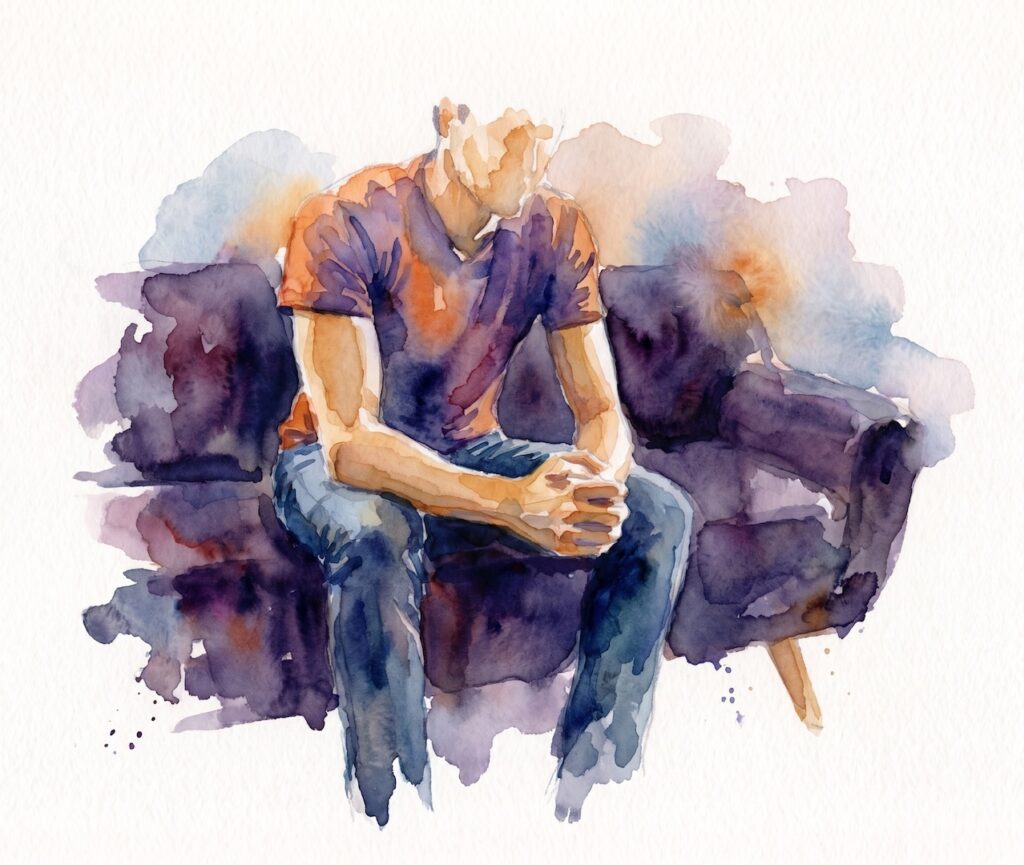
It can be a bewildering experience. You want closeness with your partner. You may even feel mentally receptive to sex. But your body doesn’t respond in the way you expect. Desire feels muted, arousal doesn’t build, or physical discomfort takes over. It is easy, in this situation, to be self-critical and, if the experience is repeated many times, to assume something is fundamentally wrong with you. Yet in many cases, the underlying issue is not an absence of desire, but the presence of anxiety which can override the natural desire response.
Understanding how anxiety shapes sexual function can be a powerful step toward change. This is not simply about ‘relaxing more’ or ‘trying harder’. It involves deeply rooted processes in the brain and body that are designed to protect you, but which can be unhelpfully active in intimate situations.
When the Body Doesn’t Feel Safe
Sexual arousal and anxiety are, biologically speaking, incompatible states. Sexual response depends on the parasympathetic nervous system, sometimes referred to as the ‘rest and digest’ system. This is the state in which the body feels safe enough to relax. Muscles soften, blood flow increases to the genitals, and awareness of pleasurable sensation begins to build, allowing arousal to intensify gradually not through effort, but through staying present in the moment and focused on the body.
Anxiety, on the other hand, activates the sympathetic nervous system – the ‘fight, flight or freeze’ response. This shifts the body in the opposite direction, scanning for what might go wrong and preparing it for threat. Heart rate rises, muscles tighten, and attention becomes focused on potential problems or risks. From a survival perspective, this response is entirely logical. If the body senses danger, pleasure is its last priority.
Difficulties arise when the brain begins to interpret sexual situations themselves as unsafe, even in subtle or unconscious ways. Anxiety around sex often develops gradually, shaped by experience. This might include past discomfort or pain, pressure to perform, fear of making mistakes, feelings of deep embarrassment or shame, a lack of emotional safety, relational tension, or past trauma, for example. This is often how patterns of sex avoidance and anxiety begin to develop, where the body starts anticipating discomfort before intimacy even occurs. Sometimes the influence is obvious, but it may not be clear. What is important to understand is that the brain learns through association. If intimacy becomes linked with tension, uncertainty, or distress, the body begins to respond protectively. This response is not a conscious decision; it is something the nervous system learns over time. Eventually, even the anticipation of intimacy can trigger anxiety, with the body preparing for a perceived threat before anything has actually happened.
The Disconnect Between Desire and Response
One of the most distressing aspects of anxiety-related sexual difficulties that my clients describe is the sense of disconnection this creates. While mentally willing and emotionally engaged, thinking, for example, ‘I want to have sex’, your body seems to respond differently, perhaps with lack of arousal, discomfort, pain, or a feeling of shutting down. There can be a genuine desire for closeness alongside a physical response that feels blocked, tense, or entirely absent. This is often experienced as desire and sexual arousal not aligning, which can be deeply confusing and clients sometimes misinterpret it as a loss of desire. The reality is that desire is still present, but it is being overridden by a stronger protective response. The system designed to keep you safe is taking priority over the system designed for pleasure and connection. It is helpful to recognise and acknowledge that anxiety is affecting your sex drive.
How anxiety disrupts sexual function
Anxiety has a way of interfering with each stage of sexual response. It can quieten desire by filling the mind with thoughts about performance, expectations, or potential difficulties. When attention is directed toward getting things right or avoiding problems, there is little space left for curiosity or enjoyment to emerge naturally.
Even when desire is present at a cognitive level, the body may struggle to follow. Physical arousal depends on a delicate balance of blood flow, nerve activity, and muscle relaxation. Anxiety disrupts this coordination. The result can be difficulty becoming aroused, a lack of lubrication, erectile difficulties, reduced sensitivity, or an awareness that the body is not responding in the usual way.
At the same time, muscles throughout the body may begin to tighten. This often happens without conscious awareness. The jaw, shoulders, abdomen and neck can hold tension, and the pelvic floor may contract without awareness. Such changes can make sexual activity feel uncomfortable or restricted, and in some cases painful or impossible. It is important to emphasise that this is not something that can be controlled through effort or willpower; it is an automatic response.
When the body is tense and alert, sensitivity to discomfort can increase. Sensations that might otherwise feel neutral or pleasant may instead feel irritating or painful. If this happens repeatedly, the brain may begin to anticipate discomfort, strengthening the cycle of anxiety and physical response. Over time, the brain may begin to expect pain, strengthening the protective response further.
Another subtle but important effect of anxiety is the way it shifts attention. Sexual pleasure depends on being able to stay connected to bodily sensations as they unfold. Anxiety tends to pull attention away from the body and into the mind. Negative thoughts about how things are going, what might happen next, or how one is being perceived can take over. This creates a sense of ‘spectatoring’: watching yourself rather than experiencing the moment. When your attention is elsewhere, the subtle sensations that build arousal and pleasure are easily missed.
Why ‘Just Relax’ Isn’t the Answer
The solution often offered is to ‘just relax’, but this advice rarely captures the reality of what is happening. Relaxation is not something that can be forced, particularly when the nervous system is already on alert. Trying to relax under pressure can sometimes make things feel worse, especially when someone is already experiencing anxiety and libido fluctuations.

A more helpful perspective is to recognise that your body is doing what it has learned to do. The response may no longer be useful, but it is not random. It reflects a pattern that has developed over time, shaped by past experiences and reinforced through repetition.
Anticipation plays a significant role in maintaining this pattern. Anxiety often begins well before any physical intimacy takes place. Thoughts about what might happen, memories of previous experiences, or concerns about how things will go wrong can all contribute to a sense of unease. In response, you may adopt habits to minimise or avoid intimacy altogether, such as going to bed before or after your partner, withdrawing slightly, keeping at a distance. While understandable, such adjustments can unintentionally reinforce the idea that sexual situations are something to be wary of, making it harder to create new, more positive experiences and increasing the pressure when intimacy does occur.
Moving Towards Safety and Connection
Shifting the way you describe what is happening can be an important step. Rather than seeing the problem as a failure or a dysfunction, it can be more helpful to view it as a protective response that has become overactive or misapplied. This opens up a different way of approaching change, especially in cases of sex and anxiety interaction, where the goal is not forcing arousal but rebuilding safety.
This process tends to work best when pressure is reduced. When there is less focus on outcomes or performance, the body has more space to settle. Gradually rebuilding a sense of safety in physical closeness can allow the nervous system to respond differently over time. This often involves a more mindful approach: going slowly, paying attention to what feels manageable, staying curious about what is happening in the moment and allowing positive experiences to develop without rushing.
Developing greater awareness of bodily sensations can also help restore connection. Learning to notice what is happening in the body without judgement can begin to bridge the gap between the mind and body. This is not about analysing or changing the experience, but about gently becoming more present to it.
It can also be important to reflect on the beliefs and expectations that may be contributing to anxiety. Ideas about performance, responsibility, or what sex ‘should’ be like can create pressure, making it harder to relax into the experience. Loosening these expectations can reduce the sense of being evaluated or needing to achieve a particular outcome.
Working with the body, rather than against it, is central to this process. This means listening to signals, respecting limits, and allowing change to gradually unfold. Pushing through discomfort or trying to override the response often leads to more tension rather than less.
When to seek support
If anxiety is significantly affecting your sexual wellbeing, professional support from a psychosexual therapist can make a meaningful difference. Many people seek help when they begin to ask whether anxiety causes low sex drive, or they notice ongoing anxiety and libido changes that feel difficult to shift alone. I support clients to look at their past and find the origins of their unhelpful patterns, to understand them in more detail, and to work through them in a structured and supportive way, addressing both psychological and physical aspects. Together, we build a new framework of intimacy that is permission-giving, non-shaming and non-judgmental. The pace is guided by what feels comfortable, and the focus is on developing a tailored approach that will create sustainable change rather than quick fixes.
Experiencing a mismatch between desire and physical response can feel isolating, and it is often accompanied by a sense of frustration or self-doubt. Yet it is far more common than many people realise. Anxiety has a powerful influence on the body, and it can easily override desire even when that desire is genuine.
Approached with curiosity rather than criticism, old patterns can begin to shift. Over time, it is possible to develop a different relationship with intimacy: one that feels safer, more connected, and more aligned with what you want. If you recognise yourself in any of this, I’d welcome the chance to help. You can get in touch with Intima Therapy to arrange an initial conversation, there’s no pressure to have everything worked out beforehand, and we can begin wherever feels right for you.