Gender dysphoria is a term many people encounter but few fully understand. At its heart, it describes a profound sense of unease arising from a mismatch between the gender a person knows themselves to be and the sex they were assigned at birth. In the United Kingdom, tens of thousands of people are currently seeking support through NHS gender services – and the debate around their care has never been more visible or more urgent.
This article explores what gender dysphoria is, how it is understood medically in the UK, and – crucially – what it means for relationships and intimacy. Identity does not exist in isolation. It lives in partnerships, in families, and in the vulnerable space between two people trying to understand one another. As a COSRT-registered psychosexual and relationship therapist, I work with individuals and couples navigating exactly this terrain, and it is from that clinical experience that this article is written.
When a person comes to understand their gender identity, it does not only affect them. It ripples outward into every intimate relationship they hold.
What Is Gender Dysphoria?
Gender dysphoria describes the significant distress that can occur when a person’s gender identity does not align with the sex they were assigned at birth. Importantly, gender identity itself – our deeply held internal sense of who we are – is not a disorder. What causes harm is the distress that arises when that identity goes unrecognised or unsupported.
The NHS is clear: gender dysphoria is not a mental illness. The World Health Organisation’s updated International Classification of Diseases (ICD-11) reclassified gender incongruence out of the mental health chapter entirely, placing it under conditions related to sexual health – reflecting a growing global consensus that being transgender or gender-diverse is not a pathology. The classification exists to ensure access to appropriate care, not to stigmatise.
It is also important to acknowledge that gender identity and sexual orientation are distinct, though often conflated, concepts. Transgender individuals may experience a wide range of sexual orientations and may identify in whatever way most authentically reflects who they are.
Coming to Know Yourself: Gender Identity in Adulthood
While public attention often focuses on young people, many transgender individuals do not arrive at a full understanding of their gender identity until their twenties, thirties, or beyond. This is not unusual, nor a sign of confusion. For many people, the process of self-recognition is gradual – shaped by access to language, community, safety, and time.
In clinical practice, it is common to work with people who are only now finding the words for something they have always, in some way, known. The relief of that recognition can be immense. So too can the anxiety – because to understand oneself more clearly is also to face what that means for one’s relationships. A person in a long-term partnership may need to share something profound and unfamiliar with someone they love. A person beginning to date may navigate the question of when and how to disclose their trans identity to a potential partner. These are not simply logistical challenges – they are emotionally significant moments that touch on vulnerability, trust, and the deep human need to be known and accepted.
When a Partner Transitions: Couples Navigating Change Together
The relational landscape
When one partner in an established relationship discloses a transgender identity – or begins to transition – the impact on the relationship can be profound. The person transitioning may experience feelings of relief, liberation, grief over time lost, and anxiety about acceptance. Their partner may experience a complex mix of love, confusion, loyalty, and questions about their own identity and sexual orientation. These responses are all valid. There is no right way to feel when the person you love reveals something so significant about who they are.
The goal of couples therapy is not to preserve the relationship at all costs – it is to help both people make honest, compassionate decisions from a place of understanding rather than fear.
What couples therapy can offer
Couples therapy provides a contained, safe space where both partners can be heard – not just the person transitioning, and not just the partner who is cisgender. Therapy can help couples communicate openly about experiences that feel too raw or too new to find words for outside the therapy room; explore questions of identity and attraction as both partners’ senses of self evolve; grieve aspects of the relationship as it was, while building something new and authentic together; and make considered, compassionate decisions about the future – including whether the relationship can continue to meet both partners’ needs.
Not every couple will stay together through a transition, and the goal of therapy is not to preserve the relationship at all costs. In my experience, couples who engage in therapy during a transition often discover unexpected depths of intimacy and trust. Others find that their paths diverge – and even in those cases, therapy can support a separation that honours the love that was there.
Relationships Between Trans and Cisgender Partners
Not all trans-cisgender relationships involve transition mid-relationship. Many transgender people enter romantic partnerships already living in their gender identity. These relationships have their own particular texture – shaped by disclosure, social navigation, and sometimes the weight of others’ assumptions. A cisgender person who falls in love with a transgender partner may find themselves in unfamiliar territory, not because their feelings are unfamiliar, but because the social scripts around such relationships are still relatively sparse.
Within the relationship itself, questions of physical intimacy, bodily comfort, and sexual desire may require more explicit conversation than they might in other partnerships. A trans partner may have a complex and evolving relationship with their body, shaped by dysphoria, medical treatment, and personal history. Open, honest dialogue – supported when necessary by a skilled therapist – is what allows both people to feel seen and desired.
The role of psychosexual therapy
Psychosexual therapy offers a specialised space to explore the intersection of gender, the body, desire, and intimacy. In my practice, I work with trans and mixed-orientation couples navigating questions such as: how does physical transition affect sexual intimacy? How do partners communicate about changing bodies and changing desires? What happens when one partner’s sense of self shifts in ways that affect the sexual relationship?
These conversations are not only possible – they are, for many couples, profoundly connecting. Psychosexual therapy is not about fixing anything. It is about creating enough safety and language for both partners to be honestly present with one another, without shame or silence. Common themes include navigating changes to the body before, during, and after medical transition; finding new language for intimacy; managing shifts in sexual confidence; and processing the grief or liberation – often both – that physical change can bring.
Young People and the Current Crisis in Access
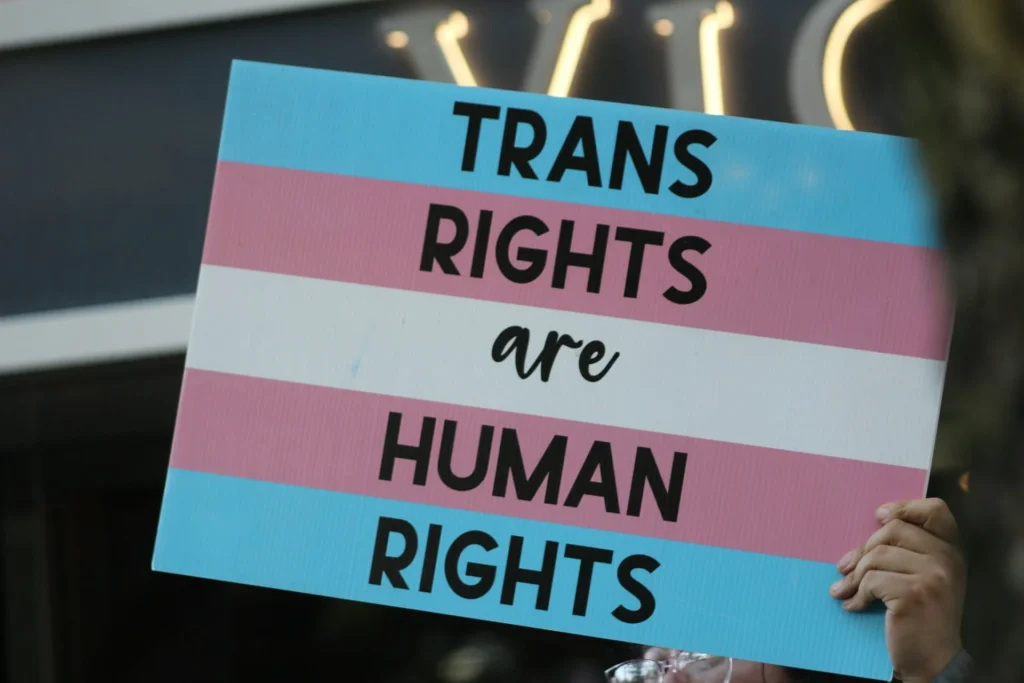
Much public debate about transgender healthcare centres on children and young people – and for good reason. The independent Cass Review prompted a significant restructuring of how services for under-18s are delivered in England. Children and young people with gender incongruence are now primarily seen within broader paediatric health settings, with psychological and psychosocial support as the first line of care. Medical interventions such as puberty blockers and hormones are no longer routinely available to those under 18; they are now offered only through a small number of closely monitored clinical research programmes.
For many young people and their families, this represents a profound and painful reduction in access. Those who are experiencing significant gender dysphoria – and who may have been on NHS waiting lists for years – now face an even narrower path to support. While a small number of specialist clinics are accepting and carefully monitoring young people within these research frameworks, the reality for the majority is one of long waits, limited options, and considerable distress.
The stress this places on transgender young people should not be underestimated. Research is unequivocal: family acceptance and peer support are among the most powerful protective factors for their mental health and wellbeing. The transition from adolescence into adulthood – with all it brings in terms of first relationships, sexual identity, and growing independence – is a particularly vulnerable time. The foundations laid during these years, and the quality of support available, matter enormously for long-term wellbeing.
Access to Care and the NHS Pathway
In the UK, accessing gender-affirming care typically begins with a GP referral to a Gender Dysphoria Clinic (GDC). There are now around twelve commissioned NHS adult GDCs in England. However, the waiting list had grown to over 40,000 people by March 2025, with average first-appointment waits of nearly five and a half years. For couples, this uncertainty – not knowing when hormones will begin or what the body will look like in three years – can place significant relational strain. NHS England has committed to a new single national waiting list from April 2026, and some areas now offer bridging prescription clinics where GPs can prescribe hormones while patients wait. Couples therapy, offered alongside the NHS pathway, can provide vital support during this often very difficult period.
Conclusion: Relationships Are Where Identity Lives
Gender dysphoria is not a mental illness – it is a deeply human experience that carries real emotional weight and calls for real support. But identity does not exist in isolation. It lives in relationships – in the way we are seen and held by the people we love, in the negotiations of desire and difference, and in the courage it takes to show ourselves fully to another person.
Couples therapy and psychosexual therapy offer something that no medical pathway can provide alone: a space to be in relationship with one another, to find language for what is changing, and to build – together or separately – towards lives that are genuinely lived. In my clinical experience, this relational work is not peripheral to a transgender person’s journey. For many, it is at the very heart of it.
If you or your partner are navigating questions of gender identity, transition, or relational change, you do not have to do so alone. Sensitive, experienced therapeutic support is available – and it can make a profound difference.
FAQs
Is gender dysphoria a mental disorder?
No. Gender dysphoria itself is not classified as a mental disorder. The NHS and the World Health Organization (ICD-11) do not define being transgender or gender-diverse as a mental illness. The term “gender dysphoria” refers specifically to the distress that can arise when a person’s gender identity does not align with the sex they were assigned at birth.
What causes gender dysphoria?
There is no single known cause of gender dysphoria. It is understood as a complex interaction of biological, psychological, and social factors. It is not something that is “caused” by upbringing, environment, or personal choice. Instead, it relates to a mismatch between a person’s internal sense of gender identity and their assigned sex at birth.
What does gender dysphoria feel like?
Gender dysphoria can feel different for each person, but it often includes persistent discomfort, distress, or a sense of mismatch with one’s body or social role. Some people describe feeling disconnected from their body, experiencing anxiety or sadness about being perceived as the wrong gender, or feeling relief when they are recognised in a way that aligns with their identity.
How to deal with gender dysphoria?
Ways of coping with gender dysphoria vary depending on the individual. Support often includes talking to therapies, such as psychosexual or gender-affirming counselling, which can help process emotions and navigate identity. Many people also find relief through social affirmation (such as name and pronoun use), supportive relationships, and, where appropriate, medical care under professional guidance. Accessing understanding and non-judgmental support is often a key part of managing distress.